
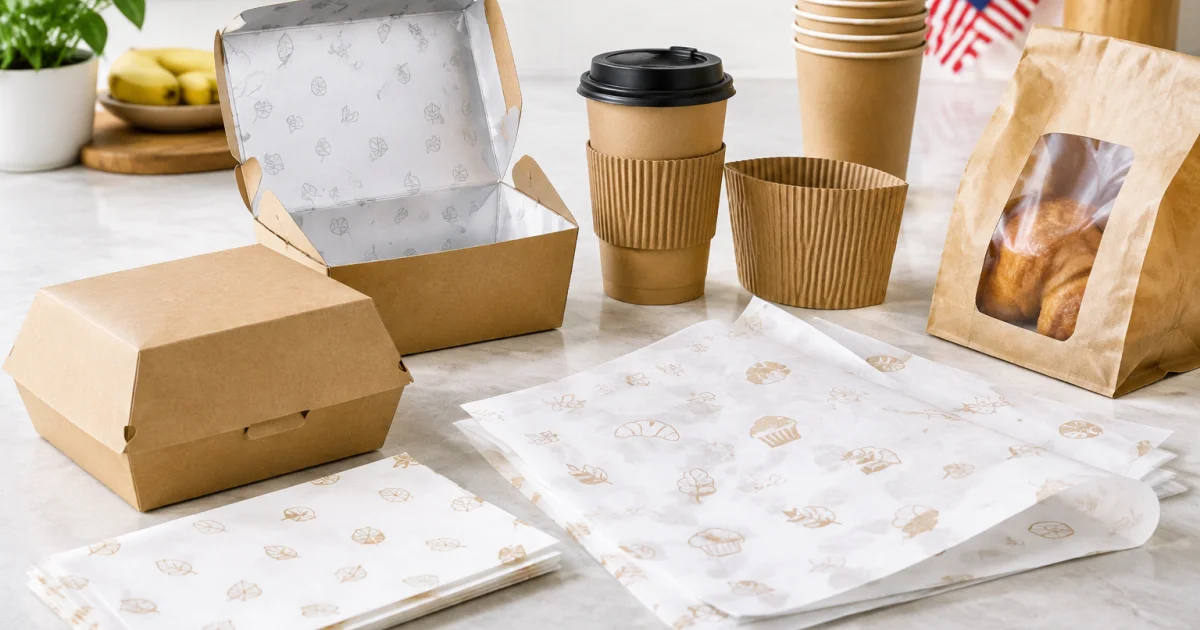

For Malaysian food brands, packaging decisions are no longer just about “nice design” and “low cost per unit”. The packaging you choose has to perform (especially for oily, hot, or saucy foods), protect the product through delivery, and present information clearly. At the same time, buyers are asking tougher questions about material choices, coatings, and what’s safe for direct food contact.
This is why food packaging printing malaysia has become a more technical sourcing conversation for manufacturers, bakeries, and restaurants. If you’re planning a packaging refresh, the biggest shifts you’ll notice are in three areas: materials, grease resistance, and compliance needs.
This article breaks down what’s changing, what it means for day-to-day operations, and how to brief a packaging printing company in Malaysia so you get the right outcome on the first production run.
1) Material choices are expanding (and becoming more application-specific)
In the past, many food businesses defaulted to a small set of packaging materials: standard paper, basic coated paper, generic plastic containers, or common folding carton boxes. Today, material selection is more nuanced because different menus, delivery models, and branding positions need different performance profiles.
When you talk to suppliers about printed food packaging, you’ll usually be choosing within (or combining) these common material families:
- Paper-based stocks: suitable for wraps, paper bags, sleeves, and some boxes. Often chosen for print quality and brand presentation.
- Coated or laminated paper: improves barrier properties and handling, but needs careful selection for food-contact use cases and end-of-life disposal expectations.
- Board and carton materials: used for takeaway boxes and folding cartons; thickness and structure matter for stacking and delivery.
- Synthetic label materials (for jars, bottles, chilled products): options such as PP labels and other film-based stocks help with water resistance and durability.
What’s “changing” isn’t just that more materials exist—it’s that buyers are matching materials to the exact food condition (hot vs chilled, dry vs oily, short shelf-life vs longer storage), and printing suppliers are expected to advise on trade-offs rather than simply quoting a unit price.
Practical examples of how application drives material choice
- Hot fried foods: need heat tolerance, structure strength, and grease management so the box doesn’t soften during delivery.
- Pastries and bread: often prioritise breathability and presentation; the goal is to avoid trapped moisture that affects texture.
- Saucy meals: need barrier performance and good seal design; the print finish must withstand condensation and spills.
- Chilled items: can cause label lifting or ink scuffing; label material and adhesive selection become critical.
2) Grease resistance is moving from “nice-to-have” to a core specification
Grease resistance used to be addressed with workarounds: doubling the paper, adding a simple inner liner, or accepting some oil marks as “normal”. Now, for many menus and delivery-first businesses, grease resistance is part of the brand experience. Customers judge quality partly by whether packaging arrives clean, firm, and presentable.
From a printing and production standpoint, grease resistance is not a single checkbox. It’s a set of related decisions involving material, barrier layer, converting method, and how the packaging is used (temperature, time, and contact area).
Where grease resistance matters most
- Wraps and sandwich paper: direct contact with oils and sauces; barrier performance affects both function and appearance.
- Food boxes for fried items: oil migration can weaken structure, stain print, and reduce stackability in delivery bags.
- Paper bags: handles and base integrity matter; oil can compromise strength, especially for heavier orders.
- Stickers sealing takeaway lids: oil and condensation can reduce adhesion, leading to broken seals or lifted corners.
How to brief a printer on grease resistance (so you get the right solution)
Instead of asking “Is it greaseproof?”, share usage details your printer can convert into specifications:
- Food type: fried chicken, nasi lemak sambal, buttery pastries, curry, etc.
- Serving temperature: piping hot off the line or cooled before packing.
- Time in pack: average delivery time and whether items sit before rider pickup.
- Contact area: full surface contact (e.g., fries) vs partial (e.g., pastries with a paper liner).
- Storage and handling: stacked in warmer bags, chilled storage, or displayed on shelves.
This kind of briefing leads to smarter recommendations, fewer sampling rounds, and better cost control—because you’re paying for performance where you need it, not overbuilding every SKU.
3) Compliance needs are rising: label clarity, traceability, and food-contact expectations
“Compliance” can sound intimidating, but for most food operators it comes down to a simple goal: packaging and labels should support safe handling and clear product communication. As brands scale from a single outlet to multiple locations—or from local deliveries to broader distribution—those expectations increase.
In practical sourcing terms, compliance-oriented printing usually focuses on three things:
- Food-contact suitability: materials and inks/coatings appropriate for intended contact conditions.
- Information accuracy and readability: ingredient lists, allergens, net weight, handling instructions, and brand identifiers.
- Traceability tools: batch coding, barcodes, and internal SKU labelling that helps operations run consistently.
What this means for labels and stickers
Even when your primary packaging is a box or cup, many brands rely on labels to carry variable information (flavour, date, batch, promos, QR codes, or outlet identifiers). This is where material selection intersects with operations.
For example:
- Condensation and chill (desserts, drinks): you may need film-based label materials such as PP labels with adhesives chosen to reduce lifting.
- Oil exposure (sauces, sambal jars): label durability and adhesive performance affect shelf appearance.
- Heat exposure (hot-fill or warm packs): labels must hold shape and remain legible.
If you’re comparing suppliers for label sticker printing malaysia, ask how they match adhesive and facestock to your storage conditions, not only how sharp the print looks. Strong print quality is essential, but it’s wasted if labels wrinkle, peel, or smudge in real use.
Barcodes and operational coding are becoming standard for more food businesses
As food businesses scale, barcodes move from “retail-only” to “operations-critical”. Barcodes can support:
- stock rotation and internal inventory control
- multi-outlet consistency (same SKU, same label template)
- e-commerce packing workflows
- warehouse and distribution scanning
If you’re planning barcode adoption, think beyond printing the barcode image on a label. You’ll also need a consistent label size, scannable contrast, and a workflow for variable data. Some businesses pair printed label supply with a barcode printer on-site for day-to-day batch/date labels—especially when SKUs change frequently.
4) Packaging structure and box printing: performance is now part of branding
Design and branding still matter—but the packaging’s physical performance is increasingly tied to brand perception. A well-designed box that collapses, leaks, or arrives stained hurts repeat orders.
When evaluating packaging box printing malaysia suppliers, it helps to treat structure as part of the spec, not an afterthought. The same artwork can behave very differently depending on board thickness, folding design, and how the box is converted.
Key box considerations that buyers are paying more attention to
- Rigidity: stronger board and smart folding reduce crushing during delivery.
- Ventilation vs sogginess: vent holes can protect crispness for fried food, but must be balanced against spill risk and heat retention.
- Closure design: locking tabs and tuck flaps affect both speed of packing and tamper perception.
- Surface finish: coatings can improve scuff resistance, but should be selected with the food-use scenario in mind.
For brands with multiple packaging SKUs, it often makes sense to standardise a few structural templates (for example: small snack box, main meal box, pastry box) and then vary only the label or sleeve design. This can simplify purchasing and improve consistency across outlets.
5) A practical sourcing checklist for your next packaging update
If you’re refreshing packaging, use this checklist to reduce risk and speed up approvals. It’s designed for restaurant operators, bakeries, and food manufacturers who need packaging that looks good, performs under real conditions, and supports day-to-day operations.
Step 1: Map your packaging to real use-cases
- List each menu item category (hot fried, hot saucy, chilled, bakery, beverages).
- Note packing temperature, time-to-consumption, and delivery method.
- Identify the “failure mode” you can’t accept (leaks, grease stains, soggy box, unreadable label).
Step 2: Define your must-haves vs nice-to-haves
- Must-have: grease resistance level suitable for your products, stable structure, legible information areas, barcode or batch fields if needed.
- Nice-to-have: premium finishes, special textures, extra colours, window cut-outs, seasonal variants.
Step 3: Plan artwork with compliance and operations in mind
- Leave space for variable data labels (date, batch, flavour, outlet).
- Ensure key information areas are readable and not placed on folds.
- Choose colours and contrasts that keep barcodes scannable.
Step 4: Sample the packaging the way customers will use it
Testing is often where issues show up. Ask for samples or pilot runs and test them with:
- real food (oil, steam, condensation)
- real time (15–45 minutes typical delivery cycle)
- real handling (stacking, rider bags, refrigeration)
Even a small pilot can prevent a large run from becoming expensive rework.
Step 5: Choose a supplier that can cover your ecosystem, not just one item
Many brands don’t just need boxes. They need a coordinated set: food boxes, wraps, paper bags, cup sleeves, stickers, and operational labels. Working with a one-stop partner can reduce mismatched colours, conflicting lead times, and duplicated setup work.
Conclusion: packaging decisions are getting more technical—and that’s a good thing
The changes in materials, grease resistance expectations, and compliance needs are pushing food brands toward clearer specifications and better supplier conversations. The upside is real: when your packaging is matched to your menu and your workflow, you reduce product complaints, improve delivery presentation, and scale operations more confidently.
If you’re preparing your next run, treat packaging like a system: the right box structure, the right barrier performance, and the right label materials working together. That’s the most reliable path to packaging that looks.
Useful next reads
- Food Packaging Printing
- Packaging Box Printing
- Packaging Printing
- Custom Box Printing
- How To Choose The Right Custom Box Printing In Malaysia For Your Products
Frequently Asked Questions
How do I choose the right material for printed food packaging?
Start with the food condition and journey: hot or chilled, oily or dry, dine-in or delivery, and how long it stays in the pack. Share those details with your printer so they can recommend the most suitable paper/board, coatings or liners, and label materials for your application.
What should I tell a supplier to get better grease-resistant packaging?
Describe your menu item (oil level and sauce), packing temperature, expected delivery time, and whether the food touches the packaging directly or sits on a liner. This helps the supplier propose an appropriate grease barrier approach rather than guessing based on generic “greaseproof” claims.
Do I need different labels for chilled products versus ambient products?
Often, yes. Chilled items create condensation that can cause label lifting, smudging, or wrinkling. Film-based materials such as PP labels, paired with the correct adhesive, are commonly used when moisture resistance and durability are important.
Can a small food business use barcodes and variable data labels effectively?
Yes. Barcodes and variable data (batch/date/flavour) can improve inventory control and multi-outlet consistency. Many businesses pre-print core branding labels and use an on-site barcode printer for variable information when SKUs or dates change frequently.
How do I find a custom made box supplier in Malaysia for takeaway packaging?
Look for a supplier that can advise on structure (rigidity, closures, ventilation), not just printing. Ask for samples, confirm suitability for your food type (especially oily/hot items), and run a simple delivery simulation test before committing to a large production run.
Plan a Better Food Packaging Run with Altrapac
If you’re updating boxes, wraps, stickers, or operational labels, Altrapac can help you match materials, grease resistance, and print requirements to the way your food is actually packed and delivered. With over 30 years of experience and a one-stop offering—from food packaging and custom boxes to label printing and barcode solutions—we support both SMEs and high-volume operations across Malaysia.
Share your food type, packing temperature, delivery time, and the packaging format you’re using, and we’ll recommend a practical spec and production approach.