
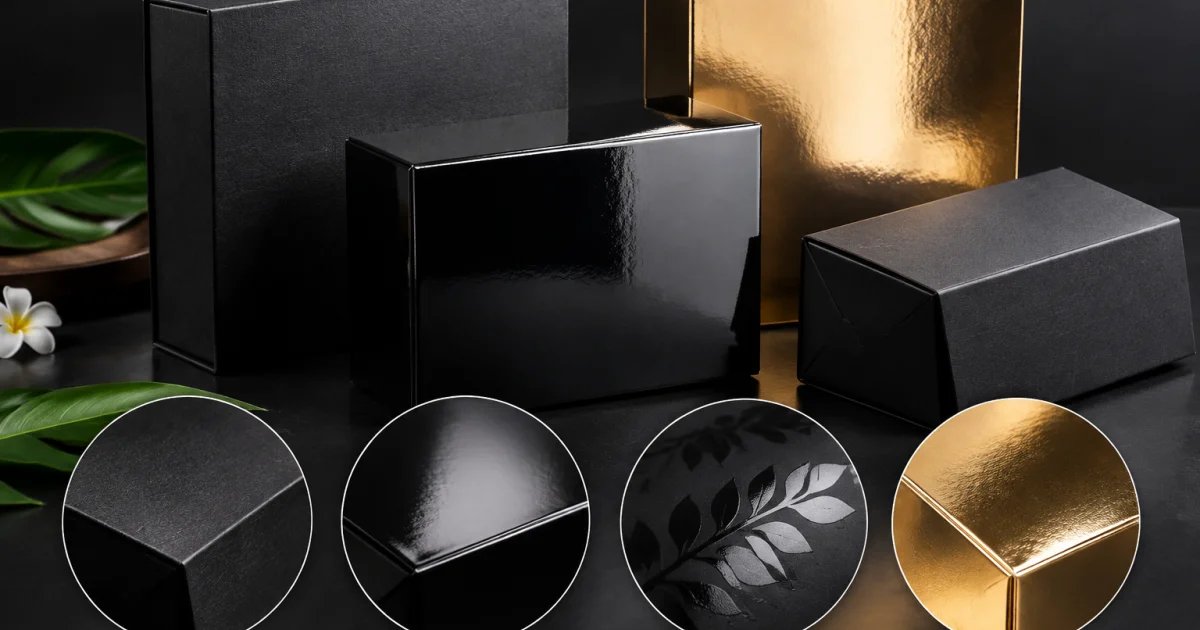

Premium packaging finishes are seductive. A soft-touch matte surface, a sharp foil stamp, or a spot UV “pop” can make a box look like it belongs on a flagship shelf—even if you sell online. But in my experience working with growing brands, the uncomfortable truth is that premium finishes only improve conversion when they solve a specific buying doubt or create a specific buying feeling. Otherwise, they’re just cost.
This article is an opinion, backed by practical production realities and what typically drives retail and e-commerce decisions in Malaysia. If you’re comparing custom box printing malaysia options and wondering whether to upgrade your finishes, use this as a decision framework—not a blanket recommendation.
What premium finishes actually do (beyond looking “expensive”)
Before you decide whether an upgrade is “worth it,” it helps to separate packaging impact into three jobs. Premium finishes can help with any of them, but not equally.
- Increase perceived product value: Finishes can signal quality, care, and premium positioning—especially for gifting, beauty, and specialty foods.
- Reduce purchase anxiety: Good packaging can reassure buyers that the product is authentic, hygienic, safe, or professionally made (important for healthcare, cosmetics, and supplements).
- Improve recognition and recall: A consistent tactile cue (e.g., a particular matte feel or a distinctive metallic accent) can help customers remember you and repurchase.
Here’s the practical catch: conversion improvements usually happen when the finish supports the message. If the design is unclear, the hierarchy is messy, or the product promise isn’t obvious, premium finishing may polish the wrong thing.
When premium finishes tend to improve conversion
Premium finishing is most persuasive when the product is bought with emotion, used as a gift, or compared against lookalike alternatives. In those cases, packaging becomes part of the product experience.
1) When you’re selling “feel” as much as function
Beauty, fragrance, artisanal food, boutique coffee, and lifestyle goods rely heavily on sensory cues. A high-end finish communicates that the product inside is equally considered.
My view: Soft-touch lamination and well-controlled spot UV can be more effective than adding lots of decorative elements. They make even minimal designs feel intentional.
2) When the unboxing is a key marketing channel
If you actively encourage unboxing content (or your category naturally produces it), premium finishes can create the “camera moment”: a foil shimmer, a raised varnish, or a neat opening experience. You’re not only aiming for a customer’s first purchase—you’re aiming for shareable.
But to be effective, the finish needs to be visible on video. Subtle finishing that only looks good under certain lighting can be missed entirely on phone cameras.
3) When price anchoring is part of your strategy
Premium packaging can support premium pricing—especially when customers can’t touch the product before purchase. This matters for e-commerce where the box often becomes the first tangible proof of brand quality.
Think of it as a silent salesperson: it reassures customers they didn’t overpay.
4) When you need trust signals (healthcare and regulated-feeling categories)
Even when you’re not explicitly making medical claims, customers are sensitive to signals that suggest cleanliness, legitimacy, and professionalism. That’s one reason terms like “healthcare box printing malaysia” appear in buyer searches: packaging is part of compliance perception, even if the real compliance work happens elsewhere.
In these categories, I often see value in finishes that improve readability and reduce scuffing, and in packaging systems that integrate with label printing needs (batch labels, barcodes, instructions). The finish isn’t just decoration—it supports clarity and durability.
When premium finishes don’t improve conversion (and may hurt it)
Premium finishing can be a distraction when it creates cost without solving a buying barrier. Worse, it can introduce production complexity that causes delays, quality variation, or packaging damage in transit.
1) When your main problem is clarity, not luxury
If shoppers don’t understand what the product is, who it’s for, or why it’s different, adding foil won’t help. In fact, it can make information harder to scan. For many fast-moving consumer goods and practical household items, clarity beats luxury.
Practical rule: Fix message hierarchy first (product name, benefit, variant, quantity, usage). Then consider finishing to emphasize the most important element.
2) When the buyer never sees the box before purchase
In pure e-commerce, customers see product photos—not the tactile feel. Premium finishing can still help (unboxing, retention), but it rarely drives first-purchase conversion unless you show it well in images and listings.
If your store photos don’t highlight the finish, it’s like buying a billboard no one drives past.
3) When shipping and handling will destroy the effect
Some finishes look amazing at handover and terrible after a week in the real world. Gloss can show scratches; dark matte can show fingerprints; heavy foil areas can crack on folds if the structure isn’t designed correctly.
If you ship nationwide, consider friction points: courier sorting, stacking, humidity, and customer handling. Packaging should arrive looking the way you intended.
4) When the finish conflicts with your brand positioning
Not every “premium” brand wants shiny. Eco-conscious brands sometimes convert better with kraft textures, minimal inks, and finishes that feel honest and sustainable. A glossy lamination may send the wrong message even if it looks expensive.
A practical decision framework: pick finishes based on the job they must do
Instead of asking, “What finish is trending?”, ask, “What must this packaging achieve for my customer?” Here’s a straightforward way to decide.
Step 1: Identify your conversion lever
- Giftability: Will customers buy this as a gift? If yes, prioritize tactile and visual “wow.”
- Trust and legitimacy: Do customers worry about authenticity, hygiene, or professionalism? If yes, prioritize neat print, scuff resistance, and readable information.
- Brand recall: Are repeat purchases crucial? If yes, choose one distinctive, repeatable finishing cue.
- Variant navigation: Do you have many SKUs? If yes, prioritize clear labeling systems and consistent color management.
Step 2: Choose one hero effect, not five
The best premium boxes usually feature one finishing highlight supported by clean design. Too many effects compete and can cheapen the look.
Examples of “one hero effect” thinking:
- Matte lamination + spot UV on the logo only
- Kraft board + simple black print + embossed mark
- Clean white box + small, precise foil accent
Step 3: Align the finish with structure and usage
Finishing choices are inseparable from box type (folding carton, rigid box, mailer), board thickness, and how the box is handled. This is where many brands miscalculate: they choose a finish from a sample photo, then discover it doesn’t behave the same on their structure.
If you’re comparing packaging box printing malaysia options, ask your supplier how your chosen finish performs on your specific box style, folds, and opening points.
Step 4: Plan for the “ecosystem,” not just the box
Conversion and retention aren’t driven by the box alone. Think about all the printed elements that touch the customer experience:
- Product labels and seals (materials like PP labels for moisture resistance)
- Barcode and batch labels for inventory and fulfilment
- Inserts, care cards, or instruction leaflets
- Outer shipping packaging or mailers
A premium finish on the box can be undermined by a low-quality label or a barcode sticker that peels off. For brands scaling fulfilment, pairing good boxes with consistent barcode label printing—and the right barcode printer consumables—often improves operations and customer experience at the same time.
How to talk to a custom made box supplier in Malaysia (so you don’t overpay)
A lot of wasted packaging spend comes from vague requests like “make it premium” or “same like this photo.” You’ll get better outcomes by being specific about what you need the finish to do.
When you brief a custom made box supplier in Malaysia, be ready to answer:
- Where is this box used? Retail shelf, e-commerce shipping, corporate gifting, in-store pickup?
- What is your dominant material preference? White board, kraft look, textured stock, synthetic laminations?
- What’s the non-negotiable? Color accuracy, scuff resistance, readability, premium feel, eco story?
- How many SKUs and how often do you change artwork? This affects production planning and unit economics.
Also ask for a physical mock-up or sample path where possible. Premium finishing is hard to judge purely from a screen because lighting, photography, and scaling change how it looks.
If you’re still earlier in the process, this guide can help you define specs before requesting quotations: How To Choose The Right Custom Box Printing In Malaysia For Your Products.
My bottom line: premium finishing should earn its place
Premium finishes are powerful when they amplify a clear brand story, reduce buyer doubt, or create a memorable unboxing that fits how you acquire customers. They don’t help when they compensate for weak messaging, aren’t visible in the buying journey, or add fragility to the supply chain.
If you want a disciplined approach, start with the simplest box that communicates clearly, then add one finish that supports your conversion lever. Over time, you can test what improves repeat purchase and word-of-mouth—without turning packaging into an uncontrolled cost center.
And if your broader packaging needs include food packs, stickers, or carry solutions, remember that consistency across touchpoints matters. A strong box plus cohesive labels and even matching paper bag printing malaysia for retail pickup can reinforce the same premium cue—without relying on.
Top Mistakes To Avoid When Designing Product Packaging For Retail.
Frequently Asked Questions
How do I choose a custom made box supplier in Malaysia for premium finishes?
Start by checking whether they can advise on structure (folding carton, rigid box, mailer) and how each finish behaves on your chosen material. Ask for a physical sample or mock-up, confirm color expectations, and clarify what “premium” means for your brand (tactile feel, scuff resistance, or shelf impact). A good supplier will also flag risks like cracking on folds, fingerprinting on dark matte, or longer lead times for complex finishing.
Which premium finishes usually give the best value for e-commerce brands?
For many e-commerce products, the best value tends to come from finishes that improve perceived quality and survive delivery—such as matte or soft-touch lamination with a single spot UV highlight. Foil can work well when used sparingly and photographed clearly in listings. If your customers won’t see the finish until after purchase, prioritize durability and an unboxing experience that supports repeat buying and sharing.
Can premium box finishing replace good design and product messaging?
Not reliably. Finishes amplify what’s already there. If the front panel hierarchy is unclear (product name, key benefit, variant), a premium finish can make the box look expensive while still failing to communicate. It’s usually smarter to fix layout, typography, and clarity first, then use finishing to emphasize one key element like the logo or hero benefit.
What should I consider if my box needs barcodes or variable labels?
Plan the full packaging system: box print, barcode label placement, and label material. Make sure surfaces and coatings allow labels to adhere well, and consider moisture-resistant materials like PP labels if needed. If you manage many SKUs, aligning box design with barcode label printing workflows (and compatible barcode printer consumables) can reduce picking errors and keep packaging looking consistent.
Is premium finishing suitable for food packaging printing in Malaysia?
It can be, when it supports the brand and usage—such as gifting, premium bakery items, or specialty foods. However, food-related packaging often faces grease, humidity, and handling, so the finish needs to be practical (easy to wipe, less prone to scuffing) and the design must keep product information readable. Discuss real handling conditions with your printer before committing to delicate finishes.
Ready to spec a box that looks premium for the right reasons?
Altrapac helps Malaysian brands match structure, materials, and finishing to the job your packaging must do—whether you need custom boxes, supporting label printing, or a complete packaging set for retail and e-commerce. With over 30 years of experience and local Penang manufacturing support, we can guide you toward premium finishes that improve presentation without adding unnecessary complexity.