

For many new Malaysian brands, the first custom packaging order is a big step: it makes your product look “real”, improves shelf appeal, and helps your team pack faster. But box printing has its own language—die-lines, flute types, laminations, spot UV—so it’s easy to overpay or choose the wrong structure.
This beginner’s guide simplifies packaging box printing in Malaysia into three decisions: box style, material, and minimum order quantity (MOQ). If you’re also coordinating other brand touchpoints (like labels or carrier bags), some suppliers handle multiple items such as boxes and paper bag printing malaysia, which can make sourcing and colour matching easier.
Start with the job your box must do
Before requesting quotations, define what the box needs to achieve. A printer can recommend a suitable structure faster when you share these basics:
- Protection: Fragile (glass/cosmetics), heavy (jars), or sensitive (electronics)?
- Shipping vs retail: Will it face courier handling or mainly sit on a shelf?
- Food needs: Dry vs oily vs hot vs chilled; steam and moisture change material choices.
- Packing speed: Simple folds reduce labour if you pack daily in volume.
- Branding area: Full-bleed visuals vs a clean logo-forward design.
Tip: Bring your label design (if you have one). Box artwork often needs to align with label printing colours and finishes (for example, consistent matte across box and sticker).
Common packaging box styles (and when to use each)
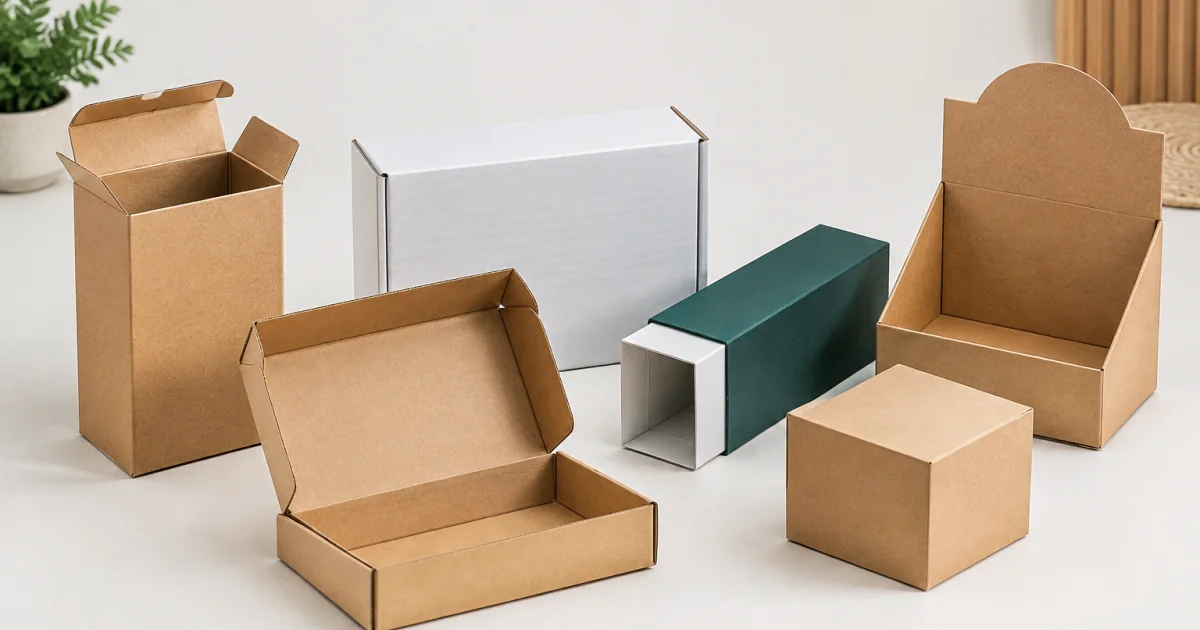
These are the structures most first-time buyers in Malaysia start with. Each balances cost, strength, and assembly speed differently.
1) Tuck-end box (straight tuck or reverse tuck)
A classic retail folding carton for skincare, supplements, and lightweight consumer goods. Ships flat and assembles quickly.
- Best for: Retail presentation for lighter products
- Pros: Clean look, large print area, easy storage
- Consider: Heavier items may need stronger board or an insert
2) Mailer box (folding corrugated mailer)
Popular for e-commerce because it protects well in delivery and can create a premium unboxing experience (including inside printing).
- Best for: Online orders, subscription boxes, curated sets
- Pros: Strong structure; may reduce need for an extra outer box
- Consider: Corrugated texture is less “smooth” than folding carton board
3) Sleeve + inner tray (or sleeve + inner box)
A printed sleeve slides over a simpler inner component. Useful when you want premium branding but practical packing.
- Best for: Gift sets, cosmetics kits, bakery items, bundles
- Pros: Premium look; sleeves can be swapped for different variants
- Consider: Two parts can increase unit cost and packing steps
4) Display box (countertop / PDQ style)
Designed to hold multiple units for retail presentation, often with a front cut-out. Packaging doubles as merchandising.
- Best for: Snacks, sachets, small personal-care items, trial packs
- Pros: Better visibility; easier restocking
- Consider: Needs accurate sizing for products and shelf constraints
5) Shipping carton / outer carton
A sturdy outer carton for moving multiple units. Often plain kraft with simple branding, handling icons, and barcodes.
- Best for: Bulk packing, logistics, distributor delivery
- Pros: Cost-effective protection
- Consider: Prioritise strength and scannable codes over heavy branding
Box materials explained: what you’ll actually be choosing
“Material” usually means board type plus thickness/strength. Printers may quote folding cartons by GSM and corrugated boxes by flute type and wall construction.
Folding carton boards (retail boxes)
Smoother boards for sharper print and premium presentation:
- Art card / ivory board: Common for cosmetics and supplements; prints crisp images.
- Kraft board: Natural “eco” look; colours can shift on brown stock.
- Lamination: Matte or gloss adds scuff resistance and durability.
Beginner note: A good-looking carton can still fail if the product is heavy. For glass jars, consider stronger board, an insert, or switching to corrugated mailer packaging.
Corrugated boards (shipping and e-commerce boxes)
Corrugated uses fluted layers for strength and cushioning. It’s ideal for shipping, but texture can affect how print appears.
- Single wall (common): Good balance of cost and protection.
- Flute type (E/B/C): Smaller flutes look neater; larger flutes cushion more.
- White vs kraft liner: White makes colours pop; kraft looks more natural.
Tip: For very crisp branding on corrugated, ask if it’s direct printed or uses a printed top sheet mounted to corrugated (often used for premium presentation).
Food packaging considerations (simple, non-legal guidance)
For F&B, material choice depends on heat, oil, and moisture. Hot or steamed items can soften low-grade paper; oily foods may need better barrier properties. If you’re exploring food packaging printing, tell the supplier whether the food is dry, oily, chilled, or hot so they can recommend practical paper and coatings. Confirm any specific safety requirements internally.
Print methods, finishing options, and what they change
“Box printing” includes both printing and finishing. Finishes affect appearance in photos, the feel in hand, and how well the box survives handling.
Printing basics
- CMYK (full colour): Standard for most designs.
- Spot colour: Helps when brand colour consistency is critical; may increase cost/lead time.
- Inside printing: Adds impact for mailers and gift sets, but adds steps.
If you also have labels and stickers, tell your supplier—matching box colour to label printing helps avoid “almost the same” colour differences across materials.
Common finishing options
- Matte lamination: Premium, soft look; hides minor scuffs well.
- Gloss lamination: Vibrant and shiny; scratches may show more.
- Spot UV: Gloss highlights (logo/pattern) on matte areas.
- Foil stamping: Metallic accents for a luxury effect.
- Emboss/deboss: Tactile raised or pressed-in details.
- Window patch: Shows the product; consider scratch resistance and recycling goals.
Cost tip: On early runs, prioritise correct structure and clean print. Add premium finishes once volume is stable.
Minimum order quantity (MOQ): why it exists and how to plan for it
MOQ surprises many first-time buyers. It’s driven by fixed production steps and efficiency, not just paper usage.
What drives MOQ in box printing?
- Die-cut tooling: Custom boxes often need a cutting die for shape and creases.
- Machine setup: Printing/finishing setup takes similar time for small vs larger batches.
- Material yield: Box size affects how many fit per sheet; awkward sizes create waste.
- Finishing steps: Lamination, spot UV, foil, and windows can push MOQ higher.
MOQ strategies for new brands
- Standardise sizes: Use one box size across variants; differentiate with stickers/labels.
- Use sleeves for variety: Keep a common inner box and change printed sleeves as needed.
- Keep finishes simple: Start with matte or gloss only; upgrade later.
- Plan storage: Boxes ship flat but still take space—confirm cartons and storage needs.
- Request price breaks: Compare unit costs at 500/1,000/2,000 to choose smartly.
Reality check: The smallest quantity isn’t always best. A slightly larger run can lower unit cost enough to offset storage—especially if you won’t change packaging for 6–12 months.
What to send your printer for an accurate quotation
- Box style (tuck-end, mailer, sleeve, display, outer carton)
- Internal dimensions (L × W × H) and product weight
- Quantity range (e.g., deciding between 500 and 2,000)
- Material preference (kraft vs white; carton vs corrugated)
- Printing (outside only vs inside/outside)
- Finishing (matte/gloss; spot UV; foil; window)
- Artwork status (final AI/PDF or need die-line help)
- Delivery location in Malaysia and required lead time
Choosing a supplier in Malaysia: a beginner checklist
For a smoother first order, choose a supplier who explains trade-offs and checks the technical details—not just one who sends a price list.
- Do they recommend structure based on your use case? They should ask about shipping, weight, and packing workflow.
- Do they provide/check die-lines? Die-line mistakes create fit issues and reprint risk.
- Can they match across components? If you need boxes plus labels/stickers, one partner can improve consistency.
- Can they scale with you? Easy reorders and higher volumes matter once sales stabilise.
- Is quality control explained? Ask how they manage colour tolerance and finishing defects (general approach).
If you’re comparing packaging box printing to broader packaging printing (boxes plus labels, stickers, and other components), choose the option that fits your current operations and near-term launches.
Conclusion: make your first box order simpler (and safer)
Your first packaging box printing project can be straightforward: start with function (protection and packing speed), pick a common structure, and choose material that matches your product weight and sales channel. Control cost with MOQ planning—standardise sizes, keep finishes simple, and use price breaks to decide the right quantity. Then work with a supplier who can support today’s first run and your next stage of growth.
Frequently Asked Questions
What is a die-line in packaging box printing?
A die-line is the template that shows where a box will be cut, folded, and glued. It includes cut lines, crease lines, and safe areas for artwork. For first-time orders, ask your supplier to provide the die-line (or check yours) before final printing to avoid fit and folding issues.
How do I choose between a tuck-end box and a mailer box?
Choose a tuck-end box when you need a clean retail look for lightweight products (common for beauty and small consumer goods). Choose a mailer box when the package must survive courier handling and you want stronger protection and a better unboxing experience for e-commerce deliveries.
Why do printers have minimum order quantities (MOQs) for boxes?
MOQs exist because box production involves setup work (printing setup, cutting/creasing, and often a custom die). These fixed steps cost nearly the same whether you print a small or large batch, so suppliers set a minimum quantity to keep the job efficient and reduce unit cost.
Can I order small quantities for my first packaging run in Malaysia?
Often yes, but it depends on box style, material, and finishing. To keep quantities manageable, start with a standard structure, limit premium finishes, and consider using one box size for multiple variants (then differentiate products using labels or stickers).
Is it better to source boxes, labels, and paper bags from one supplier?
For many growing brands, yes. Working with one packaging partner can simplify coordination and improve consistency across print colours and finishes. It can also help you plan a complete set of packaging items (boxes, label printing, and paper bag printing) with compatible materials and timelines.
Plan your first custom box with Altrapac
If you’re preparing your first packaging order, Altrapac can help you choose a practical box style, suitable material, and a quantity that fits your budget and storage space. As a one-stop printing and packaging partner with decades of experience, we support custom box printing, food packaging printing, labels and stickers, and more—so your packaging system stays consistent as you scale.
Share your product size, quantity range, and preferred look, and we’ll advise on structure, finishing, and print-ready setup for a smoother first run.